how to fall out of love

I think I was ten or eleven when my cousin Eric broke up with his long-term girlfriend Dana. I loved Dana. She was willowy thin with poofy permed hair and a thick Tennessee accent. When we visited, she talked to my sister and me like we were her friends, though I must’ve been, at most, half her age at the time.

I remember standing in my parents’ bathroom while my mom was doing her makeup one morning, trying to understand why Eric and Dana were splitting up. “Sometimes,” my mom said, “people just fall out of love.”

I was familiar with the fickle politics of elementary school romance (when Colby dumped me because I wouldn’t kiss him behind the lockers, I’d ripped his school photo into tiny pieces and deposited them into a friend’s open palm to give back to him) but I’d never imagined an adult could love someone one day and then not love her a week or a month later. I’d had friends whose parents had gotten divorced, but I assumed it was because someone had done something wrong. Someone had had an affair, or started drinking too much, or fallen in love with his wife’s sister. Divorce, I thought, was  directly linked to depravity. Obviously I watched too much television.

“You and Dad wouldn’t fall out of love, though,” I’d said to my mom. It was something in between a declaration and a question.

“We could,” she’d said. “You never know.”

At the time, I was pretty uncomfortable with this idea, which is probably indicative of how sheltered and easy my childhood was. I struggled to imagine ever not loving any of the people I loved.

As an adult looking back on this moment, and as someone who thinks often of what it means to love or not love someone (and of those gray areas in between), I’m really interested in the metaphor: falling out of love. It has the same kind of helpless passivity as its progenitor (falling in love), but I’m not quite convinced that these are opposite processes.  Continue reading
prom night in America

The prom is, in a way, the quintessential teenage love story. It’s mythology is larger, by far, than the event itself, thanks to the attendant rituals–which are, it seems, becoming increasingly elaborate–and countless teen movies whose plots pivot on that one night when everyone finally seems to get what they deserve. Prom is prom not for what it is–a bunch of overdressed, overeager teenagers–but because of what we want it to be. Even in my parents’ love story the prom figures in as a crucial plot point.

“I think the prom is very serious also. It’s an American ritual, it’s a rite of passage, and it’s very much a part of this country.” –Mary Ellen Mark

My own first prom was with Dave–Dave who was number 33 on the football team, who played guitar in an actual band, who, some people said, was still in love with his ex-girlfriend even though everyone suspected she’d ditched Dave for Meghan. I remember standing at my locker one day after seventh period when Dave–this guy I hardly knew but totally adored–walked up and asked me to prom. Just like that. Like Samantha in Sixteen Candles, I thought. Occasionally he’d call me after dinner and I’d sit on my bedroom floor listening as he practiced the guitar solo from “Stairway to Heaven” and trying to think of something interesting to say when the song was over. I never admitted that I didn’t know if  I’d ever even heard “Stairway to Heaven” (I was a devoted Beatles fan–but Zeppelin was, at the time, way too rock-and-roll for me).

On prom day, I left school early to have my hair done. It was, I think, the only time my dad—by then principal at a neighboring high school—let me miss class without being debilitated by illness. Donna coaxed my stick-straight hair into wavy curls with the aid of about a half a can of hairspray. Afterwards, I locked my keys in the car and spent two hours in the Wal-Mart parking lot in the neighboring town. I wore a cream colored dress with silver embroidery and while I stood around waiting for Dave to pick me up, my dad told me I looked really pretty. If he was a teenage boy, he said, he’d be cooking up ways to try and steal a kiss.

If my dad had asked later why Dave stopped calling, I would’ve only been able to say that we had a nice time that night; that Dave didn’t really like to dance but was happy to sit with me in a rocking chair on the front porch of the old southern inn; that when he realized he forgot our tickets and had to run back home during dinner, his best friend’s date turned to me and said “I can tell you really like him,” and my face burned red. But I was grateful that my dad didn’t ask, that I didn’t have to say that no, he never kissed me, never even tried, that I was actually nothing like the girls he’d had crushes on high school.

This, I think, is the nature of prom, the unavoidable consequence of an event that is so laden with expectation. One is always left with the same questions I ask my students as they write their final papers: so what? who cares? It easy to be disappointed by prom, or to be cynical about the hype, the lavish spending (which, according to USA Today, is an average of $1078 per student), and the school-sanctioned homophobia. But I recently discovered this photo/video project by Mary Ellen Mark and her husband Martin Bell and I’m charmed by how seriously they treat their subject, how the kids are so self-conscious and yet so unaware of how they must be perceived by anyone other than their peers. I like how, in making a book and movie about prom, they’re actually telling a story about race and class, sex and sexuality, and that gap between who we are and who we hope others will perceive us to be. Mark’s photos capture what I didn’t understand when I was sixteen–how visible that gap is, how, perhaps, it is never more apparent than it is on prom night in America.

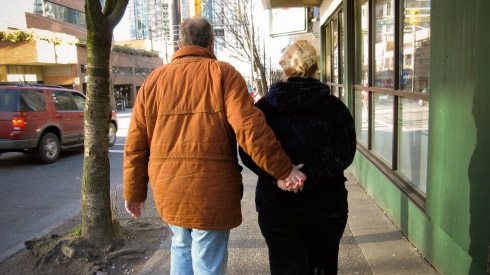
holding hands at eighty: first comes love, then comes marriage…then comes death?

Two summers ago, on a hot, sunny Saturday, I’d been shopping for wedding gowns with my friend Liz. We’d found ourselves in a strip of East Vancouver stores which all seemed to be owned by middle-aged women, several with a special taste for beige satin roses or iridescent, pearl-studded butterflies. We were beginning to doubt our ability to find something simple and light and appropriate for a Mexican beach.

As we stepped out into the bright afternoon, an elderly couple walked by, hand in hand.

“So, when you see older couples, do you think of you and J?” Liz prompted.

Since I’d asked her, rather drunkenly on New Year’s Eve, if she’d still be my friend if J and I split up, she’d been trying, in the most patient and neutral way, to help me solve the puzzle of my relationship.

“No,” I’d said, honestly. But then I’d backtracked, “Well, kind of. I don’t think to myself, ‘J is the one person for me in the whole world. I could never be happy with anyone else.’ But I feel like he’s mine. I can’t really imagine being with anyone else. You know what I mean?”

Liz smiled with her mouth but frowned with her eyes. She did not know what I meant. But how could she? She was planning a wedding with someone that, as far as I could tell, she’d never really been mad at. Someone it seemed she had absolutely no doubt that she wanted to spend the rest of her life with.

The doubtlessness of people like that always got to me. Mostly because I’d never experienced it. When you find the one, you just know, people sometimes said. But this seemed false somehow, almost anti-intellectual, as if they were all arguing that atoms didn’t exist because we couldn’t see them. You’ll know he’s the one if you can imagine yourselves together at eighty. 

But how many other things had I ever been that certain about in my life, I wondered. After a sweaty day of rock climbing, I’m not the one who dives into the icy lake to get the shock over with. I know it’s easier that way, but, no, I wade in, ankles first, knees second, splashing my thighs, waiting, reserving the option of retreating to shore before I am fully immersed.

When it came to relationships, everyone had a barometer, I decided, an indicator of potential for life-long success. Did it matter that I didn’t think of J when I saw a happy elderly couple? As long as he came into our bedroom before work, stuffing the covers underneath me and saying, “Wake up, my little breakfast burrito,” how could I imagine loving another person? Even if I couldn’t see us together at eighty, I couldn’t bear the thought of waking up alone tomorrow.

My friend Duffy, who is privately (he has not even confessed this to me–too much is at stake) this blog’s biggest fan, sent me a link to an article in the New York Times on the necessary interdependence of romantic love and death. Briefly, the main argument is this: Continue reading

on being young and in love–or on writing memoir and selling yourself out

Last week I was out to dinner with some friends when one asked me, “Does it bother you that J might read your blog?”

My first response was instinctive: “No. He knows what I’m writing about. He’s always known, since I started this project. And he’s read big chunks of it.”

But, as I let the question settle in, I wasn’t sure that was a good answer. I thought of Joan Didion, who I seem to be quoting often these days, and who famously said that “writers are always selling someone out.” I tried explaining what I’ve mentioned here before, that I don’t know how to write about love stories without writing about our relationship. So, despite the fact that, in the many years we were together, J was generously supportive of my writing, I think carefully about what I post here whenever it also implicates him. I said that I tried to write from a place of honesty and kindness, though I’m often not sure if honesty and kindness can co-exist that easily.

“No,” Jen said as we finished our sushi, “I mean, does it bother you that he can see, you know, what an effect he’s had on you?” No one had ever asked me this before, but in a round about way, I guess I have thought about it.

Cheryl Strayed, when asked at the recent Associate Writers Program conference about embarrassing her ex-husband in writing about the end of their marriage, said, “If you’re going to show anyone’s ass, it’s going to be your own.” And I tend to agree with this idea about memoir. The memoirs I like the most don’t have an agenda or anything to prove. They’re motivated by genuine inquiry, starting with the self.

Jen’s question reminds me of a photograph I came across a few months ago. In it I am sitting on one of the leather couches at the Hirshhorn Gallery in Washington, DC. When we lived in the city, J and I often rode our bikes to the Hirshhorn, but this photo is from our first visit, when I lived in Florida and he lived in Ecuador.

I remember riding the narrow escalator upstairs, standing on the higher step so I was eye to eye with him, and staring into his face as if I might die if I stopped looking. I remember thinking that the people around us could see how I was staring at him, and him at me, and that for the sake of decency, we ought to stop looking at each other like that. But we didn’t stop. We spent the afternoon whispering, and gazing at the art, and then at each other. That we would soon be apart again made the whole experience all the more poignant in my mind, because that’s how you think about love at twenty-two. Continue reading

some thoughts on the essay, the lifespan of facts, and street photography

A couple of weeks ago, I mentioned the ongoing debate about truth, genre, and the writer’s responsibilities to the reader, at the center of which is self-declared essayist John D’Agata. Well, the debate rages on. I particularly appreciate Dinty Moore’s lucid comments about D’Agata’s rather manipulative approach to what is, in the end, a really valuable conversation about nonfiction writing.

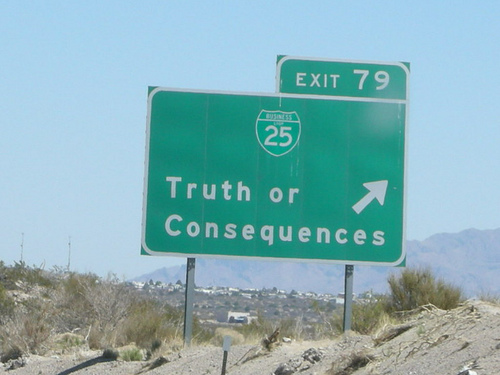
If you haven’t been keeping up, what you need to know is this. John D’Agata (lyric essay writer) and Jim Fingal (fact checker) recently published a book which contains their lengthy and heated exchange about an essay by D’Agata which was published in The Believer. The book quickly reveals D’Agata’s willingness to change the facts on what appears to be an otherwise-journalistic essay about a boy’s suicide in Las Vegas. The two men debate the merits of the facts in the face of larger aesthetic choices, with Fingal representing a relentless (and at times extreme) commitment to factuality and D’Agata interested primarily in aesthetics (the rhythm of a sentence is better, for example, when it says there were 34 strip clubs in Vegas, despite the fact that there were actually only 31).

Now, it turns out that even the e-mail exchange was a kind of exaggerated performance piece, with the each man playing his respective role in an attempt to make the conversation less “nerdy,” more “dramatic,” and ultimately, more publishable.

Because I cannot resist, I decided to chime in on this debate in the comments section of Dinty’s blog post and ended up writing a relatively-long response. So I thought I’d post it here as well, for anyone who might be interested in the larger conversation about fiction and nonfiction, essay writing, facts, truth, and the writer’s obligations to his or her readers. If you are a true nonfiction nerd, and interested in more discussion, check out the many other comments in response to Dinty’s post.

Here, for what it’s worth, are my thoughts on the matter:

Etymologically speaking, “essay” once meant “to try” and also “to weigh” or “to test.” And one of the things I love about the personal essay is that it incorporates those historical definitions into its contemporary form. But “essay” as we use it today is a noun that contains the verb. And this noun also contains specific ideas about truth, which can’t be arbitrarily dismissed.

Continue reading

simply dig: thinking about the stories we tell ourselves

As I’ve indicated in earlier posts, I’ve been thinking a lot lately of how and why we tell our own love stories. And as I write, I keep coming back to a particular moment.

The night before my college graduation, J came to visit. He was not my boyfriend then. I had not seen him in a year and a half.

Four of us were sleeping in my dorm room that night: me in my bed, my roommate Katie and her soon-to-be husband Joel in her bed, and J on the floor in a sleeping bag. After a celebratory dinner with all of our parents, after settling into our respective spots sometime around midnight and turning out the lights, I realized I wasn’t going to sleep. The person I’d spent the past sixteen months dreaming about was in my room, and I could hear him shifting, still awake, the rustle of his skin against the nylon bag. Every dream I’d had about him been the same: his body next to mine under the duvet, his chin against my clavicle, the weight of a leg pressed upon my abdomen. And each time I’d wake up angry. Angry with the duvet for covering only me. Angry with myself for wanting him there. But then he’d written a letter saying he was coming to visit. This person who hadn’t even attended his own graduation wanted to come to mine. This person who I thought I’d never see again was lying on my dorm room floor.

I knew I should sleep—my family was arriving at eight the next morning—but instead, I stood up and whispered to him, “Do you want to go for a walk?”

We spent the night wandering the campus. He told me about his mud house in the Andes, about how he passed the days hiking through the forest above his home, about amoebas, about weeks of eating only rice and eggs and beans. And for the first time I could see that I’d been living in his past, in the life he’d left behind. What could he care about the ordinary world I still inhabited? The content of my letters, which before had seemed mundane, now also seemed childish.

So when we were sitting on the track sometime before dawn and he said, “I think about you, a lot,” it felt like someone had dropped a rock on one side of the scale in my stomach. And that mantra I’d been chanting—”Grad school in Florida. Grad school in Florida.”—just slid off the other side. It was the mantra I’d been using to steady myself, to remember that his visit was just a visit, not an opportunity to get distracted from the exciting new life I’d worked so hard to arrange for myself. But even in my unbalanced state, I remember thinking: this will make a good story someday.

Continue reading

the head and the heart: a valentine to the brain

One of the best things about writing (publicly) about love–and I think I’ve said this before–is that people send me love stories. They send me articles and images and videos, and I have not yet gotten tired of receiving them.

On Valentine’s Day in particular love stories abound, and they run the gamut from saccharine to sad; some are so full of the right kind of sweetness that my eyes go glassy on the bus ride home from work, and others are more like the middle-aged couple beside me at the bar tonight who dedicated their dinner hour to some heavy hand-holding. Later, I was unsettled to find them standing beside my bicycle and making out in that slow-yet-aggressive way that includes certain unconscionable suction noises that neither my loud jokes nor my flashing LEDs could modify.

For most of today, I was content to read the love stories, the one about the nun and the monk, the letter from a wife to her husband’s student, the photo essay of marriages that survived half a century, even the dog and the box of chocolates. But on my bus ride home, tear-ducts prickling as I listened to yet another love story (what is it with tears and transit?), it occurred to me that one who keeps a blog about love stories–and receives them via e-mail and reads them in between classes–ought to post a Valentine, even if at the eleventh hour. So here it is, friends, the most lovely of love stories I saw, read, or heard today (collected both on and off the bus). It includes lots of beeping, whirring and mechanical noises, but no suctioning, I promise.

This is ostensibly a story about science (though the science itself seems a bit shaky, even by the researcher’s own admission). What really got me, however, was not the data gathered from the subjects, but the participants’ post-experiment radiance, their astonishment at their own capacity for love. After just five minutes spent meditating on a loved one in an fMRI machine, even those most infatuated seem to surprise themselves, as if the machine stuffed the love into their brains rather than measuring what was already there. By internet standards, it’s not a short video–about fifteen minutes long–so wait until you’re settled on the couch (or bus seat, as the case may be) with a bottle of beer and a dog at your ankles and a few minutes to yourself. It’s worth the watch, even if–especially if–you haven’t spent your day doing any heavy hand-holding.

some sloppy and unrelated thoughts on love and writing

Today it took three presses of the sleep button combined with Roscoe’s cold nose on my shoulder to motivate myself to throw off the duvet and put my bare feet on the floor. I was forty minutes late to my regular Friday morning writing session, and even after employing  “the Klonsky method”–my friend Dave swears by a precise combination of caffeine and sugar (the mocha) to kick-start the brain–I still couldn’t direct my thoughts enough to put together a proper blog post. So I’ve given up. I’ve accepted that my mind, like most of downtown Vancouver, is going to be occupied by low-altitude haze today.

With that said, I have some assorted thoughts:

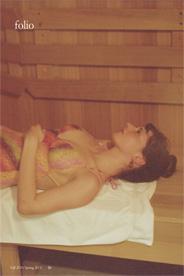
Number one, I got a nice e-mail from the folks at Folio last week, and I thought I’d pass it along to interested writers. Folio is a literary journal published at my alma mater, American University. Last year, in addition to poetry and fiction, they started publishing nonfiction, including a short essay I wrote called “On Love and Naming”. Now they’re looking for more nonfiction, so if you’re interested, submit. The staff is fantastic: supportive and easy to work with. They’re also running their first-ever fiction contest this year. So if you’re a fiction writer, enter! If you’re interested in reading, rather than writing, subscribe! It’s a steal.

In other–totally unrelated–news, I stumbled across an intriguing concept today: The Museum of Broken Relationships. The museum is a touring exhibition of donated items: artifacts that remained after romantic love ended, what the curators call “the ruins of relationship.” From their website:

Whatever the motivation for donating personal belongings – be it sheer exhibitionism, therapeutic relief, or simple curiosity – people embraced the idea of exhibiting their love legacy as a sort of a ritual, a solemn ceremony.  Our societies oblige us with our marriages, funerals, and even graduation farewells, but deny us any formal recognition of the demise of a relationship, despite its strong emotional effect.  In the words of Roland Barthes in A Lover’s Discourse: “Every passion, ultimately, has its spectator… (there is) no amorous oblation without a final theater.”

I’ve been reading Jeffrey Eugenides’s new book The Marriage Plot which quotes extensively from Barthes’s A Lover’s Discourse. And now that Barthes’s book is on my radar it seems to be popping up everywhere. The idea of love–and particularly the breaking of a relationship–as something that contains an element of theater makes sense to me. One item from the online exhibition is an old Nokia cell phone with the caption, “He gave me his cell phone so I couldn’t call him any more.”

In my first year composition classes, I ask my students to write an analysis of an artifact somehow related to their education. The students who really invest in the assignment inevitably return good results: what the red engineer’s jackets suggest about the role of gender in the engineering faculty, how the ads the university uses to attract new students sell a lifestyle rather than an education, the conflicting messages student dining facilities convey about health and eating. I suspect my students would be pretty terrible at writing about artifacts related to love–they are a smart but often sentimental lot–but I love the idea of performing a similar analysis of love’s artifacts.

My favorite artifact from the online exhibition is a Slovenian bread bowl. The jilted lover writes,

You wanted me to bake bread. Because a woman kneading dough is so erotic, isn’t she? You probably thought I’d work up such a sweat that it would drip from my breasts directly into the bowl.

Continue reading

the power of a deadline

I decided to enter the CBC’s Canada Writes Nonfiction Literary Competition this week. Immediately, there were two problems with this decision: One, I first heard about the competition five days before the deadline. And two, the regulations included an unusual word count requirement: 1200-1500 words. Ordinarily, writing competitions or journals give writers a maximum word count, but rarely do they give a range. And if they do give a range, it’s rarely so narrow. A full-length essay usually falls between 3000-4000 words. A short-short–or flash–essay, an increasingly popular form of nonfiction, typically has an upper limit of 700-1000 words. Of course, 1200-1500 words is a lot like the length of a blog post, but blog posts–or anything self-published for that matter–were strictly disallowed.

Because I started teaching a new class this week (and, yes, because I needed to go to the climbing gym and to a movie and to a beer tasting event), I didn’t have the chance to start cobbling together a submission until about two days before the Wednesday-at-midnight deadline.

And this is the power of a deadline. I spent about five hours on Wednesday trying to turn a 900 word piece into a 1200 word piece and somehow, right at the last minute, what had been a pretty good scene became something bigger and more interesting. It was a scene that I thought might fit into my book, but probably won’t, a scene about the first time J and I talked about love. Adding another 300 words forced me to ask myself a lot of really useful questions:

What are the power dynamics involved in asking someone if they love you? Or in telling them that you love them?

How can I write about someone I spent ten years of my life with, a relationship that I still have lots of unresolved and complex feelings about, in a way that is fair to both of us?

And why do I keep coming back to this scene, to the two of us at twenty, lying on his old lumpy futon and talking about love? What is it that matters about that moment?

I really like this post by Shanna Mahin in defense of the memoir. In response to the criticism that memoir writing is some kind of misguided attempt at self-therapy, she writes, “If I can come from a place of honesty and love, I might be able to tell a personal story that resonates on a universal level.” And I like Jennifer Bowen Hicks’ argument that an essay should be like “an earnest whisper in another’s ear—how brave. Put away thoughts of black lace and sordid secrets. The sort of whisper I mean can be about hummingbirds or athlete’s foot, an aging parent or eggplant. Its very purpose is not to show, but to say, and by saying to connect.”

I have understood for some time that when it comes to my own love story, my position is the more sympathetic one. I wanted it more. And when it comes to love, we identify with the one who wants the relationship more. The pain of the lover is always deeper, more acute, more compelling than the pain of the loved. Of course we were both lovers and we were both loved, but the story, as I cannot help but tell it, inevitably contains my belief that I wanted it just a little bit more. I was attracted to J for his independence. I loved that he was like no one else I knew. He was (still is) insistently nonconformist. I wanted to be someone who was unafraid to move alone to a village in the middle of the Andes. But since I could not be that person, I decided to fall in love with that person instead.

Continue reading

reading the missed connections

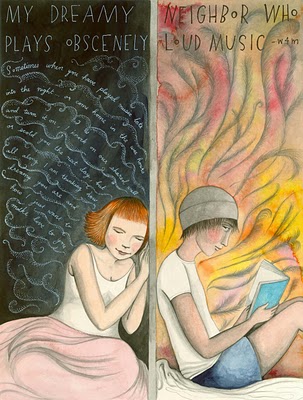
Last week I stumbled across a series of illustrations inspired by craigslist Missed Connections:

They’re by artist Sophie Blackwell, and all are selected from the New York City craigslist. I love how her prints capture the near-universal experience of unrequited love and secret crushes, but also our uniquely contemporary ability to broadcast those affections to a larger audience. It’s the adult equivalent of the middle school trick where you tell a friend to ask your crush’s best friend if he also has a crush on you. If no news comes back, you’ve saved yourself the embarrassment of rejection, but, hey, at least you gave it a shot.

When I worked as a barista at a popular coffeeshop in Washington, DC, I sometimes read the Missed Connections. My coworkers (who were an admittedly attractive and charming group) were frequent subjects of unspoken affection. But that was years ago, and in the intervening time, I’d kind of forgotten about that corner of craigslist. So I opened the Vancouver page to see what kind of stories I might find there.

Blackwell’s world is fully of mostly-young, mostly-white people who read Bukowski on the subway and have funky, furry hats and cool tattoos. Their affections are quirky and intelligent, and they write with the dreamy tone of the truly smitten. Their desires are wholesome and decidedly un-creepy. They want to buy someone a drink or say “thanks for smiling at me” or express a public regret for not saying hi. But a search of Vancouver’s missed connections turns up a more complex, slightly darker world. Continue reading